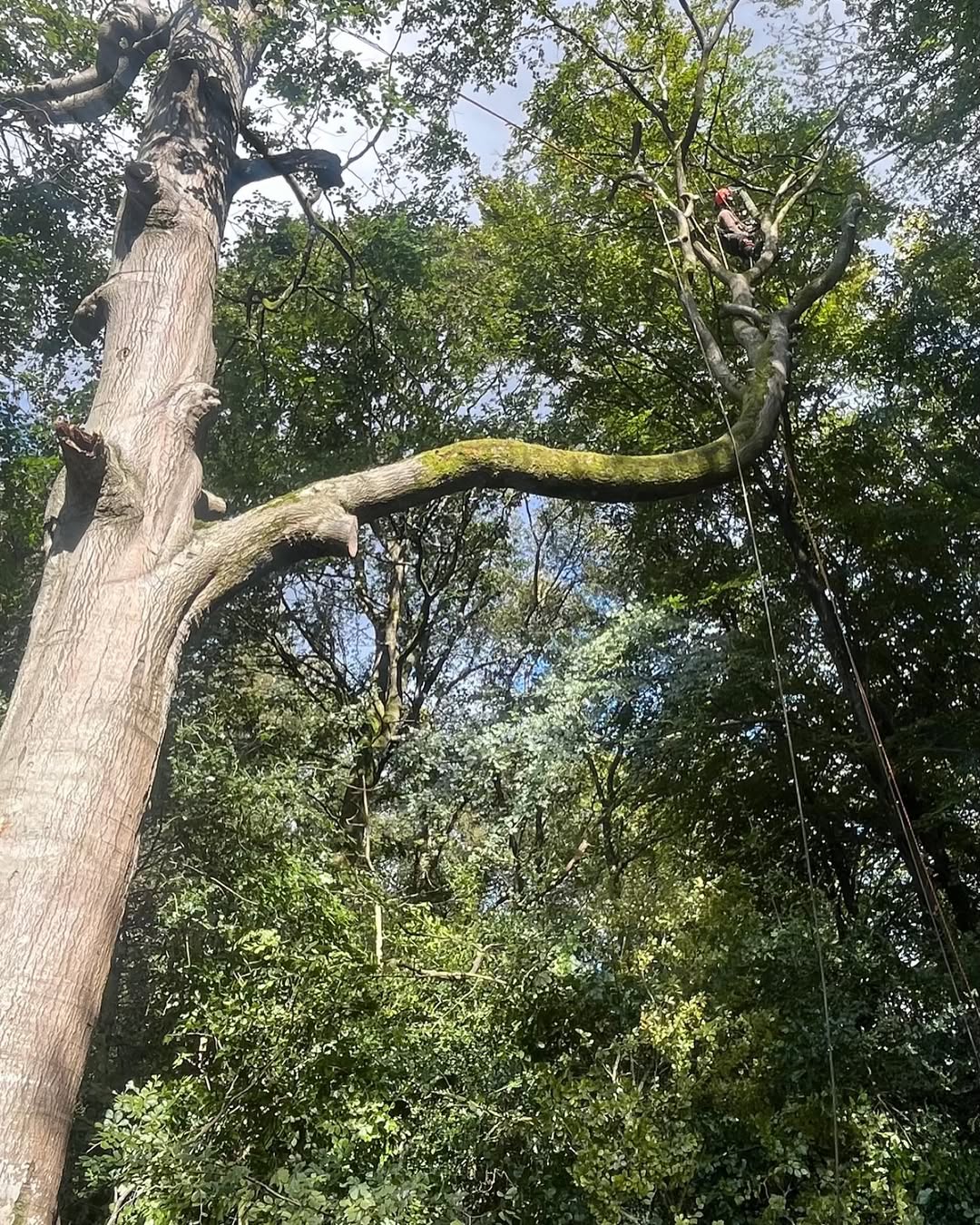
Understanding BS3998 Standards
Untrained loppers destroy trees. Professional arboriculture, as practiced by our teams across Crawley and the broader Surrey border, rigorously adheres to BS3998:2010 Tree Work Recommendations. This standard ensures that pruning operations are not merely cosmetic but biological interventions designed to promote long-term structural health.
Crown Lifting for Vertical Clearance
Lifting involves the precise removal of the lowest lateral branches to increase the vertical clearance gap over highways, driveways, or sightlines. In high-traffic areas like the Crawley town centre or the Tilgate estate, lifting is essential for maintaining pedestrian and vehicle safety.
Technical Specifications:
- Maximum Lift Height: We strictly maintain the 1:3 ratio, ensuring that the primary crown remains 2/3 of the total tree height to manage the center of gravity.
- Occlusion Planning: Cuts are made exactly outside the branch collar to ensure rapid occlusion (healing) of the cambium layer, preventing the ingress of airborne pathogens like Inonotus hispidus.
Crown Reduction for Structural Load Management
Reduction is highly technical. It requires shrinking the overall geometric volume of the canopy while maintaining the natural species-specific silhouette. For mature specimens in coastal-adjacent areas like Worthing or high-exposure sites in the South Downs, reduction is a critical safety protocol.
Wind-Sail Management:
We target 'end-weight reduction' on over-extended limbs. By shortening the lever-arm effect of major laterals, we significantly reduce the probability of branch failure during gale-force winds. This increase in the tree's aerodynamic efficiency prevents the 'sail effect' while maximizing light penetration to the property below.
Species-Specific Pruning Cycles:
- Oak (Quercus robur): 3-5 year cycles focused on deadwooding and light reduction.
- Beech (Fagus sylvatica): Sensitive to heavy pruning; requires technical thinning to manage weight without causing sun-scorch on the bark.
- Lime (Tilia x europaea): Often requires more frequent maintenance to manage epicormic growth.
Require Expert Assistance in Surrey or Sussex?
If you suspect pathogen infection or require structural pruning managed under strict conservation guidelines, our local teams are instantly available for dispatch.